
The Role of Ancestor Altars in Feng Shui Homes

Jul
Introduction
In traditional Chinese culture, the ancestor altar holds a place of deep reverence. But what role does it play in Feng Shui homes today?
More than just a shrine for honoring one’s lineage, an ancestor altar also acts as a powerful energy anchor—connecting the living with the past, and grounding the home’s spiritual harmony. In this article, we’ll explore the cultural and energetic significance of ancestor altars in Feng Shui homes, and how their placement can influence family unity, prosperity, and generational blessings.
What Is an Ancestor Altar?
An ancestor altar (also known as zǔxiān táng 祖先堂) is a designated space for honoring deceased family members. It usually includes:
- Portraits or memorial tablets of ancestors
- Incense holders and candles
- Offerings such as fruits, flowers, or tea
- Auspicious decorations or calligraphy scrolls
While its religious meaning may vary, its Feng Shui function remains consistent: it serves as a spiritual foundation of the home, symbolizing family roots, gratitude, and continuity.
The Feng Shui Significance of Ancestor Altars
In Feng Shui, a home’s energy is more than just spatial—it’s generational. Ancestor altars help:
- Anchor family Qi: By honoring your roots, you stabilize the family’s overall energy
- Promote harmony: When ancestors are respected, blessings flow to descendants
- Attract protection: A properly placed altar invites ancestral support and guidance
- Balance Yin energy: Ancestors represent Yin; their presence grounds the more active Yang forces in the household
Thus, placing an ancestor altar isn’t just about tradition—it’s about energetic integrity.

Best Locations for Ancestor Altars in Feng Shui Homes
Where you place your altar matters. The following guidelines reflect both cultural wisdom and Feng Shui principles:
1. Living Room or Family Room
This is the most ideal location. It’s central, peaceful, and accessible for regular offerings and reflection. Place the altar against a solid wall for support, and ensure it’s elevated off the ground.
2. Avoid Bedrooms and Kitchens
Placing the altar in a bedroom introduces conflicting energy between sacred stillness and personal intimacy. Likewise, the kitchen’s fiery and practical energy clashes with the altar’s spiritual tone.
3. Face Inward, Not Out the Door
Altars should never face the main door directly, as this symbolically sends blessings out of the home rather than retaining them. Instead, let it face inward or toward the heart of the house.
4. Avoid Sha Qi and Clutter
Do not place ancestor altars under beams, near mirrors, or in cluttered corners. These features disturb Qi and disrupt the energetic balance needed for ancestral connection.
How to Maintain the Altar’s Energy
Even the most auspicious placement means little if the altar is neglected. Here’s how to keep the energy clean and flowing:
- Burn incense regularly to activate Qi
- Clean dust and clutter weekly
- Replace offerings frequently with fresh fruits or flowers
- Use proper lighting, such as candles or soft lamps, to create a respectful ambiance
Remember: the ancestor altar is a living symbol of gratitude. It should feel warm, calm, and sacred—not dark or forgotten.
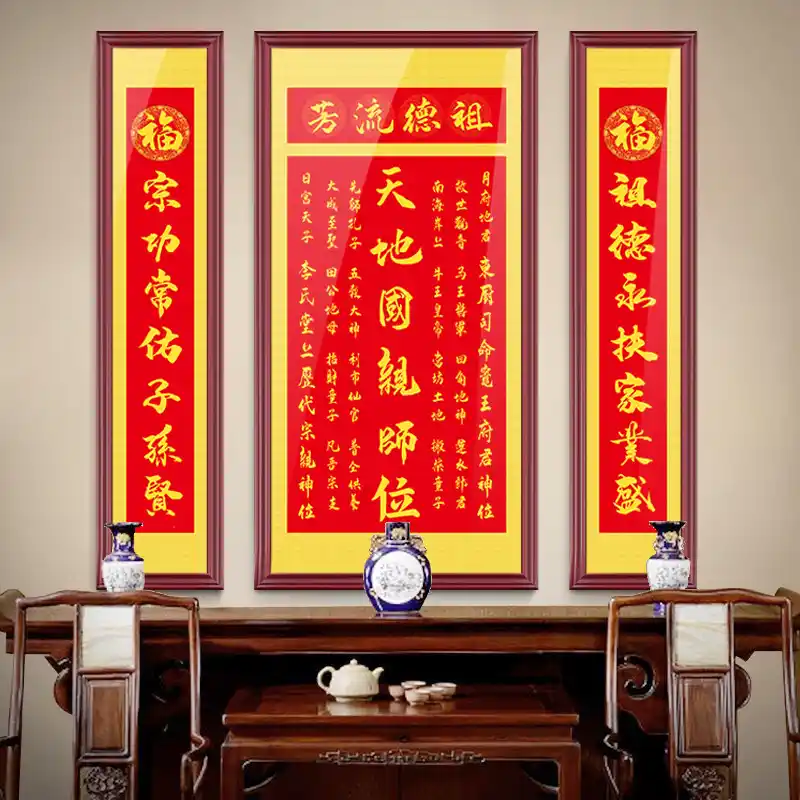
Feng Shui-Compatible Altar Decor
You can enhance the altar’s Feng Shui energy with appropriate symbolism. Some suggestions include:
- Crystals: Amethyst (wisdom), rose quartz (love), and clear quartz (purity)
- Traditional coins or Wu Di Qian: For abundance and protection
- Images of cranes or pine trees: Represent longevity and enduring blessings
- Gold or red cloths: Invite good fortune and honor the Yang aspect of reverence
Avoid symbols of violence, sadness, or extreme emotions, as they disrupt the altar’s calm and reverent tone.
Ancestor Altars in Modern Homes
Even in contemporary apartments or minimalist interiors, ancestor altars can find their place. A floating shelf, a quiet corner with intention, or even a dedicated cabinet can serve as meaningful spaces.
The key is sincerity and regular engagement, not opulence. Modern Feng Shui values the energy behind your actions more than strict tradition.
Conclusion
In Feng Shui homes, the ancestor altar serves as both a spiritual bridge and an energetic stabilizer. It reflects a family’s respect for the past while nurturing harmony in the present.
By placing your altar wisely and tending to it with care, you invite generational support, emotional grounding, and a profound sense of home.
Need help integrating an ancestor altar into your Feng Shui layout? Contact our experts for personalized consultation tailored to your home’s energy and family history.
