
Minimalist Feng Shui: Creating Calm, Clutter-Free Energy at Home

Aug
When people come to me for Feng Shui advice, they often expect I’ll recommend adding things: more plants, more crystals, maybe even a fountain or two. But here’s the funny truth—one of the most powerful Feng Shui adjustments isn’t about adding at all. It’s about subtracting.
That’s where minimalist feng shui comes in. By combining the art of simplicity with the wisdom of energy flow, you create a home that not only looks serene but also feels alive with balance.
Let’s take a walk through this idea together, from clearing clutter to creating space that breathes intention.
What Is Minimalist Feng Shui?
Minimalism and Feng Shui might seem like modern roommates, but their philosophies overlap beautifully. Minimalism says: less clutter, more clarity. Feng Shui says: clear pathways, smoother qi.
Both aim for flow, balance, and mindfulness. A minimalist approach doesn’t mean living in an empty white box—it means everything you keep has meaning, beauty, or function.
I once helped a client in Paris who had a collection of 200 porcelain cats. Each one was “special,” but her tiny apartment was suffocating with feline stares. Once she chose just three that truly mattered, not only did the room feel lighter, but she finally stopped complaining about “bad sleep.” Coincidence? Her qi would say otherwise.
Decluttering as the First Step
In Feng Shui, clutter is like cholesterol in your arteries: it blocks the natural flow. You may not see it immediately, but you feel the stagnation in your mood, motivation, and even opportunities.
Start small:
- Clear your entryway. It’s the mouth of qi—first impressions count.
- Remove “just in case” items. If you haven’t touched it in two years, your energy hasn’t either.
- Avoid stuffing things under the bed. That’s where rest should be peaceful, not a storage unit.
Minimalism doesn’t demand you live with nothing. It simply asks: Does this object contribute to harmony or block it?
Minimalist Feng Shui for Key Areas
Living Room Balance
Your living room sets the tone for the whole home. Keep seating open, avoid blocking windows, and let qi circulate. A single plant in a beautiful ceramic pot can uplift more energy than a dozen mismatched decorations.
Bedroom Calm
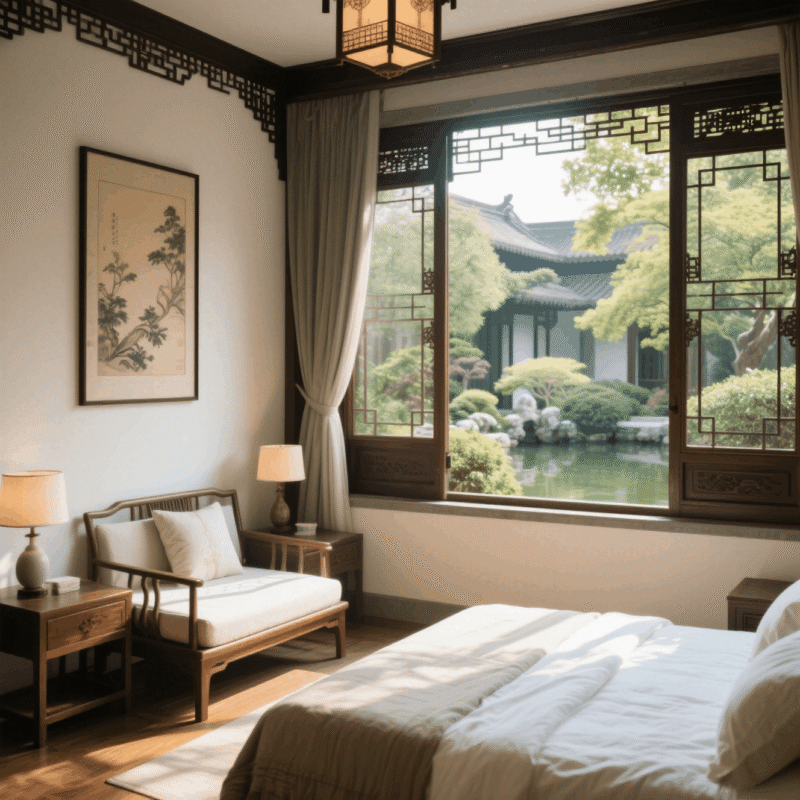
This is where Yin energy should dominate. Minimalist feng shui here means: no exercise equipment, no piles of laundry, no glowing screens. A well-chosen lamp, soft bedding, and maybe one calming artwork are enough. I had a client in New York who swapped a gallery wall for one watercolor painting—she swears her dreams got sweeter.
Work Space Focus
Too much clutter equals scattered attention. In your home office, keep only what serves your productivity. A clean desk with a single crystal for focus (clear quartz is my go-to) beats shelves overflowing with forgotten self-help books.
Choosing Feng Shui Decor the Minimalist Way
Here’s the rule of thumb: if it doesn’t serve both form and energy, it probably doesn’t belong.
- Crystals: One well-sized piece is stronger than ten tiny ones scattered like confetti.
- Plants: Go for one or two healthy, vibrant greens rather than a forest of wilting pots.
- Symbols: Choose what resonates with your life path. A small Wu Lou for health, or a Pixiu pendant for prosperity, can be discreet yet effective.
The minimalist feng shui approach is about quality, not quantity. A jade pendant on your nightstand can carry more meaning than a dozen souvenirs from forgotten trips.
The Emotional and Energetic Benefits
Minimalist feng shui doesn’t just create pretty Instagram corners. It has tangible effects:
- Less stress: A clear space gives your nervous system a rest.
- More energy: When qi flows freely, so do your ideas and moods.
- Sharper focus: Removing clutter also clears mental noise.
One client of mine told me, “After decluttering my kitchen, even my cooking tastes better.” That’s the kind of subtle but real difference you’ll notice.
Everyday Practices for Yin Yang Harmony
Balance isn’t static—it shifts with seasons and moods. Here’s how to keep your minimalist feng shui alive daily:
- Open windows for fresh air circulation
- Return objects to their “home” after use
- Swap harsh lighting for softer, layered light in evenings
- Practice one-in-one-out: if you bring something new in, let something old go
Think of your home as a living organism. Minimalist feng shui is the daily nutrition that keeps its qi healthy.
Final Thoughts: Less Stuff, More Life
Minimalism isn’t about depriving yourself; it’s about making room for what matters. Feng Shui isn’t about superstition; it’s about harmony with your environment. Put them together, and minimalist feng shui becomes a lifestyle of space, clarity, and quiet joy.
As I like to tell my clients: don’t let your sofa be lazier than you, and don’t let your décor talk louder than your spirit. When everything is in balance, your home feels like an ally, not a burden.
So take a deep breath, look around, and ask: what can I release today to let my qi flow better tomorrow?
