
Taishan Shigandang in Feng Shui: Ancient Protection for Modern Homes

Aug
The Origins of Taishan Shigandang in Feng Shui
When people ask me about the most iconic Feng Shui talismans in Chinese history, I often smile and say, “Have you met the Taishan Shigandang yet?”
This stone guardian comes from the majestic Mount Tai — the most revered of China’s Five Great Mountains — and carries centuries of protective energy.
The phrase “Shigandang” literally means “the stone that dares to face danger.” It’s like having a brave warrior standing at your gate, unafraid to confront any harmful energy rushing your way.
Historically, Shigandang stones were placed at village entrances, crossroads, and home gates. They weren’t just decorative; they were spiritual sentinels, deeply woven into the lives of Northern Chinese communities, especially around Shandong province.
How Taishan Shigandang Works in Feng Shui
From a Feng Shui perspective, harmful Qi (often called “Sha Qi”) can travel along straight paths — like roads, alleys, or waterways — and hit a home directly.
Think of it as wind blowing straight into your face: too strong, too direct, and it disturbs the balance inside. The Taishan Shigandang acts as a Qi buffer, absorbing or deflecting these aggressive flows.
Traditionally, it’s believed that the connection to Mount Tai infuses the stone with strong yang energy — grounding, stabilizing, and protective. And because it’s made from stone, it represents the earth element, which is inherently steady and enduring.
Common Situations Where Taishan Shigandang is Used
1. Taishan Shigandang for Road Alignment Issues in Feng Shui
If your home sits at the end of a straight road and traffic flows directly toward your front door, this is considered a classic “road-sha.” Placing a Shigandang stone in front, or at the point of impact, helps slow down and redirect the energy.
2. Taishan Shigandang for Alley or Bridge Facing Homes
Narrow alleys and bridges pointing toward a home can create concentrated streams of Qi — too much in one spot. Here, the stone’s presence breaks up the direct hit.
3. Taishan Shigandang for Sharp Architectural Corners
When a building’s sharp corner (poison arrow) points toward your property, the Shigandang acts as a shield, neutralizing the cutting energy.
The Symbolism Behind the Inscription
A true Taishan Shigandang has its name carved in bold characters: 泰山石敢當.
Why carve the name? Because it’s not just a label — it’s a declaration. It tells unwanted energy, “I dare to stand here and block you.”
In Feng Shui, intention is everything. By inscribing the stone, the maker and the homeowner strengthen the object’s energetic command.
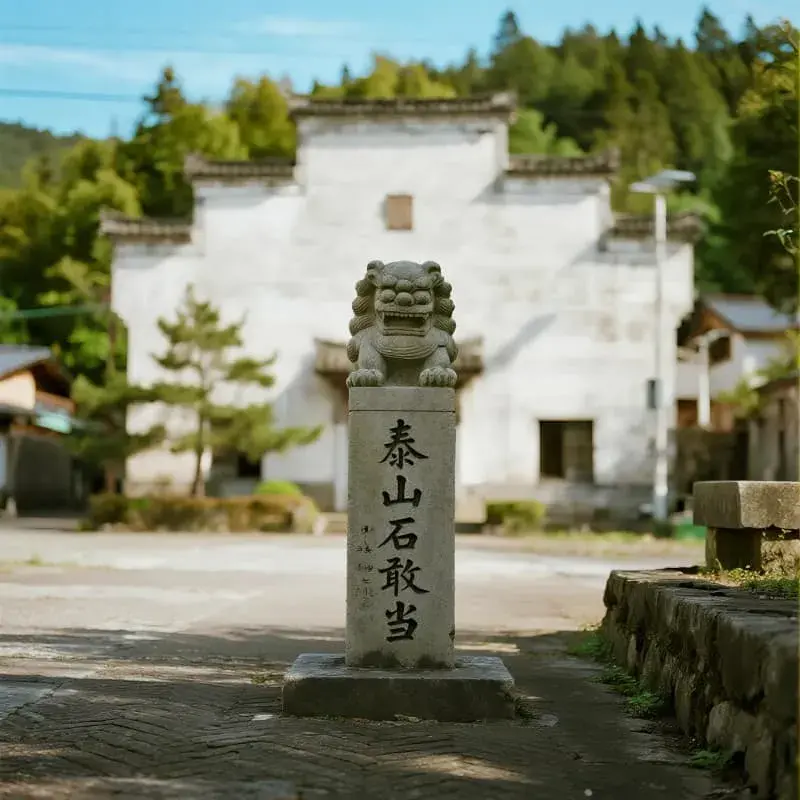
Modern Applications of Taishan Shigandang in Feng Shui
1. Decorative Integration
In urban homes, a large stone in the driveway might not be practical. Instead, smaller engraved stones or plaques can be mounted on walls or incorporated into landscaping.
2. Portable Talismans
Miniature Shigandang amulets have appeared in jewelry form — pendants or keychains — especially for people living in high-traffic areas or frequently traveling.
3. Interior Placement
If external placement isn’t possible (like in apartments), placing the stone near windows or doors facing the source of Sha Qi can still be effective.
How to Choose a Taishan Shigandang for Your Home
When selecting your stone, here’s what I tell clients:
- Material: Granite or other dense natural stone is best.
- Authenticity: Look for Shigandang sourced from or blessed at Mount Tai — this carries cultural and energetic significance.
- Size: Bigger isn’t always better; it should fit proportionally with your space.
- Inscription Clarity: The carving should be deep and clean, as it’s part of the stone’s “voice.”
Taishan Shigandang Feng Shui Placement Tips
- Direction Matters: Place it directly between the source of Sha Qi and your home.
- Stable Grounding: Make sure it’s firmly fixed; a wobbling stone can’t “stand guard” effectively.
- Respect the Guardian: Avoid using the stone as a planter stand or random decoration. Treat it with intention.
My Story with Taishan Shigandang
Years ago, a friend in Shandong invited me to his family home. Their front door faced the end of a busy road, and a majestic Shigandang stood at the entrance. He told me, “It’s been here longer than I have — my grandfather placed it. We’ve never had an accident or major conflict in this house.”
I remember thinking: whether you believe in energy or not, having a visible symbol of protection changes how you feel in your space — and that feeling alone can shift the Qi inside.
Bringing Ancient Feng Shui Protection into the Future
The Taishan Shigandang isn’t just a stone; it’s a cultural bridge between the ancient world and modern living. It teaches us that protection isn’t only about physical barriers — it’s about intention, history, and the energy you invite into your home.
If your living space faces harsh, direct energy, or you simply want an enduring guardian rooted in centuries of tradition, the Taishan Shigandang is worth considering. After all, sometimes the strongest shield is the one that’s been standing for hundreds of years.
